
Near Heights MRA Expansion Approved by City Council
SAN PEDRO MAIN STREET CORRIDOR GAINS
NEW TOOLS FOR REINVESTMENT
On Monday, May 4, the Albuquerque City Council voted unanimously to expand the Near Heights Metropolitan Redevelopment Area to include 67 properties along the San Pedro Main Street corridor, covering approximately 36 acres between Lomas Boulevard and Cagua Place NE. Councilor Grout recused herself from the vote. The expansion was approved as Resolution R-2026-6.
This was a long time coming — and a genuinely shared achievement.
The designation report which provided the justification for this change was developed by City Council Services, with principal planning work led by Omega Delgado, Deepa Bansal, and Matt Cox. Councilors Tammy Fiebelkorn and Nicole Rogers championed the resolution. RSPP served as co-applicant throughout the process, hosted the public engagement meeting at our office in January, and helped translate a complex policy tool into plain language for the businesses and property owners who have the most at stake.
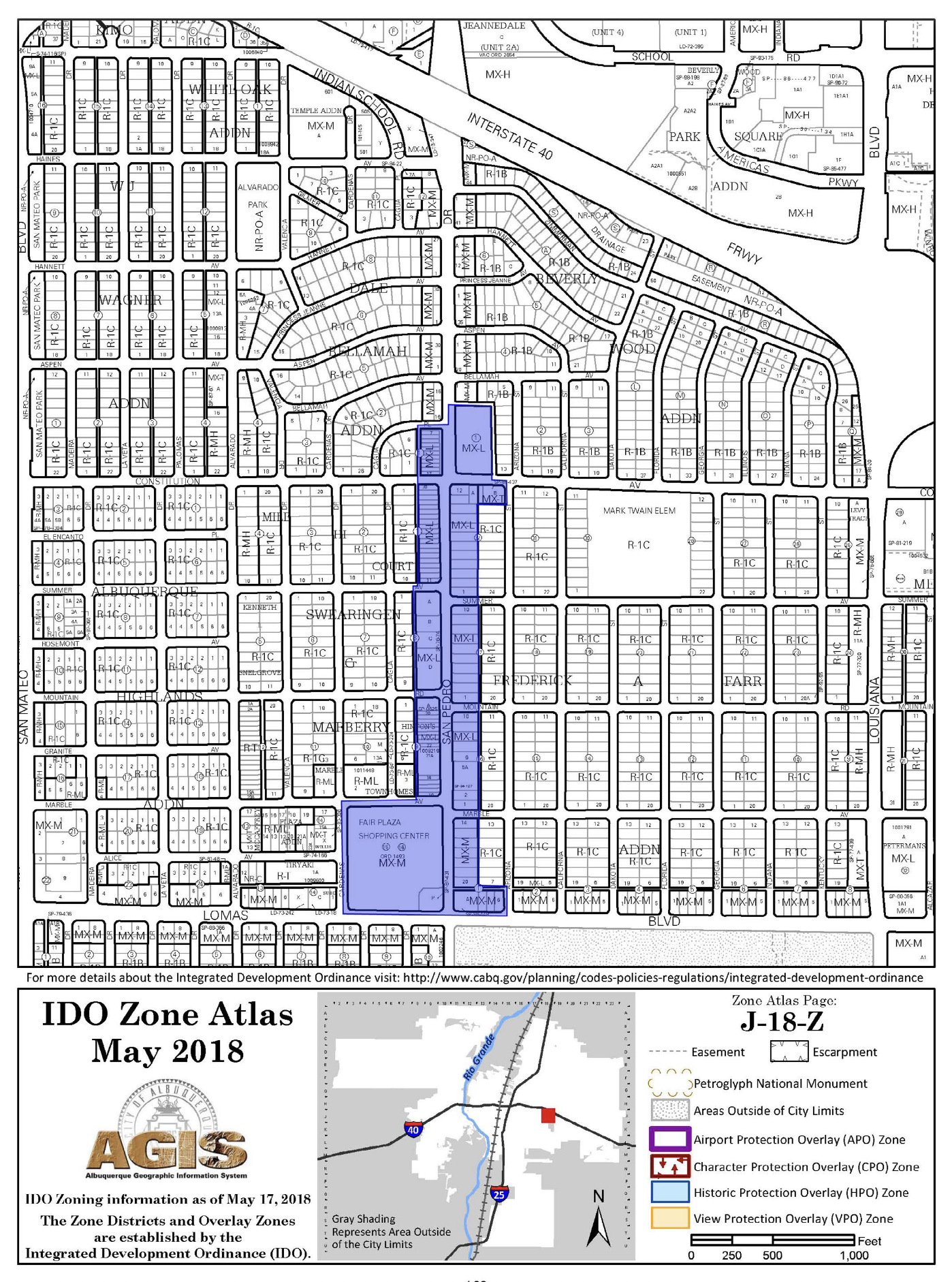
Map showing the parcels newly added to the Near Heights MRA
WHY THE CORRIDOR NEEDS THESE TOOLS
The case for designation was built on evidence, not assertion. The designation report documented conditions that people on the corridor have been living with for years:
vacancy rates of 15–20% in existing building stock,
nearly 45% of commercial properties underperforming in property value growth compared to district-wide trends,
deteriorating sidewalks and infrastructure that fall well short of the City's own Main Street corridor standards,
fragmented ownership across 54 individual property owners, and
more than 250 code enforcement cases filed along the corridor in 2025 alone.
The surrounding neighborhood lost 6.8% of its population between 2010 and 2020 — a contraction that happened while Albuquerque and Bernalillo County grew. Businesses have struggled to retain tenants. New ones have come and gone. The physical environment — cracked sidewalks, excessive curb cuts, deteriorating signage, minimal shade or landscaping — has not made it easy for anyone to invest with confidence.
The designation report met five out of seven blight criteria required by the Metropolitan Redevelopment Code, exceeding the minimum threshold of four. The data made the case, and the community confirmed it: at the January public meeting, all 23 survey respondents supported moving the proposal through the public hearing process.
THE OPPORTUNITY THIS CREATES
MRA designation is not a zoning change. It does not dictate what must be built or redeveloped. What it does is give the City a set of tools it can deploy in partnership with local businesses and property owners when opportunities arise. Three of the most significant now available to the corridor:
Boutique Business & Property Grants
The City's MRA offers targeted grants to small businesses and property owners in designated redevelopment areas for improvements including security upgrades, façade rehabilitation, and beautification. These are accessible, near-term resources that can help an existing business make a visible improvement without taking on debt.
Redevelopment Tax Abatement (RTA)
The RTA program freezes property taxes at predevelopment values during construction or renovation, then maintains that level for a period after completion — giving property owners time to stabilize before paying taxes on an improved asset. Most RTA projects involve long-vacant or underutilized buildings that generate minimal tax revenue. The program exists specifically to make reinvestment in those properties financially viable.
Tax Increment Financing (TIF)
TIF is a longer-horizon tool, but potentially the most powerful for a corridor like San Pedro. Once a TIF district is established within an MRA, up to 75% of the incremental growth in property tax and gross receipts tax revenue over a 20-year period can be reinvested directly back into the area that generated it — funding public infrastructure, business support, and catalytic reinvestment. TIF does not raise taxes or redirect existing revenue from schools, flood control, or other taxing entities. It captures new growth and puts it back to work locally. With the Mile Hi Streetscape Enhancement Project moving toward construction this summer and the State Fairgrounds redevelopment on the horizon, the corridor is positioned to generate exactly the kind of incremental growth TIF is designed to leverage.
THE BIGGER PICTURE
The designation report notes something worth saying plainly: few areas in the city have the level of on-the-ground organizational capacity that exists on the San Pedro Main Street corridor. That capacity — built over more than 15 years of community organizing before RSPP was ever formally constituted — is part of what made this designation possible. The City's own justification document identified RSPP's role as fiscal sponsor, project manager, stakeholder convener, and ongoing assessor of corridor conditions as a meaningful asset in the case for designation.
MRA tools work best when there is an organization capable of connecting them to the people who need them. That's the work ahead.
The next step in the process is development of an updated Near Heights Metropolitan Redevelopment Area Plan for the expanded corridor — a community-informed document that will establish the goals and priorities guiding how these tools get used here. RSPP will be engaged in that process.
This is a shared win. Credit goes to Councilors Fiebelkorn and Rogers for their commitment to the corridor, to Omega Delgado, Deepa Bansal, and Matt Cox for the rigorous planning work that carried this from concept to approval, and to the residents, business owners, and property owners who showed up and made the case in their own words.
For RSPP, it's confirmation that sustained, community-grounded advocacy produces results. More on what MRA designation means for corridor businesses will be coming in the weeks ahead.