
Public Safety Town Hall Recap
Safety Is the Foundation. Here's What the Corridor Said.
On March 25, we gathered at the School Arts Building on the NM State Fairgrounds for the Public Safety Town Hall — a conversation RSPP convened specifically for businesses, property owners, and community members along the San Pedro Main Street corridor.
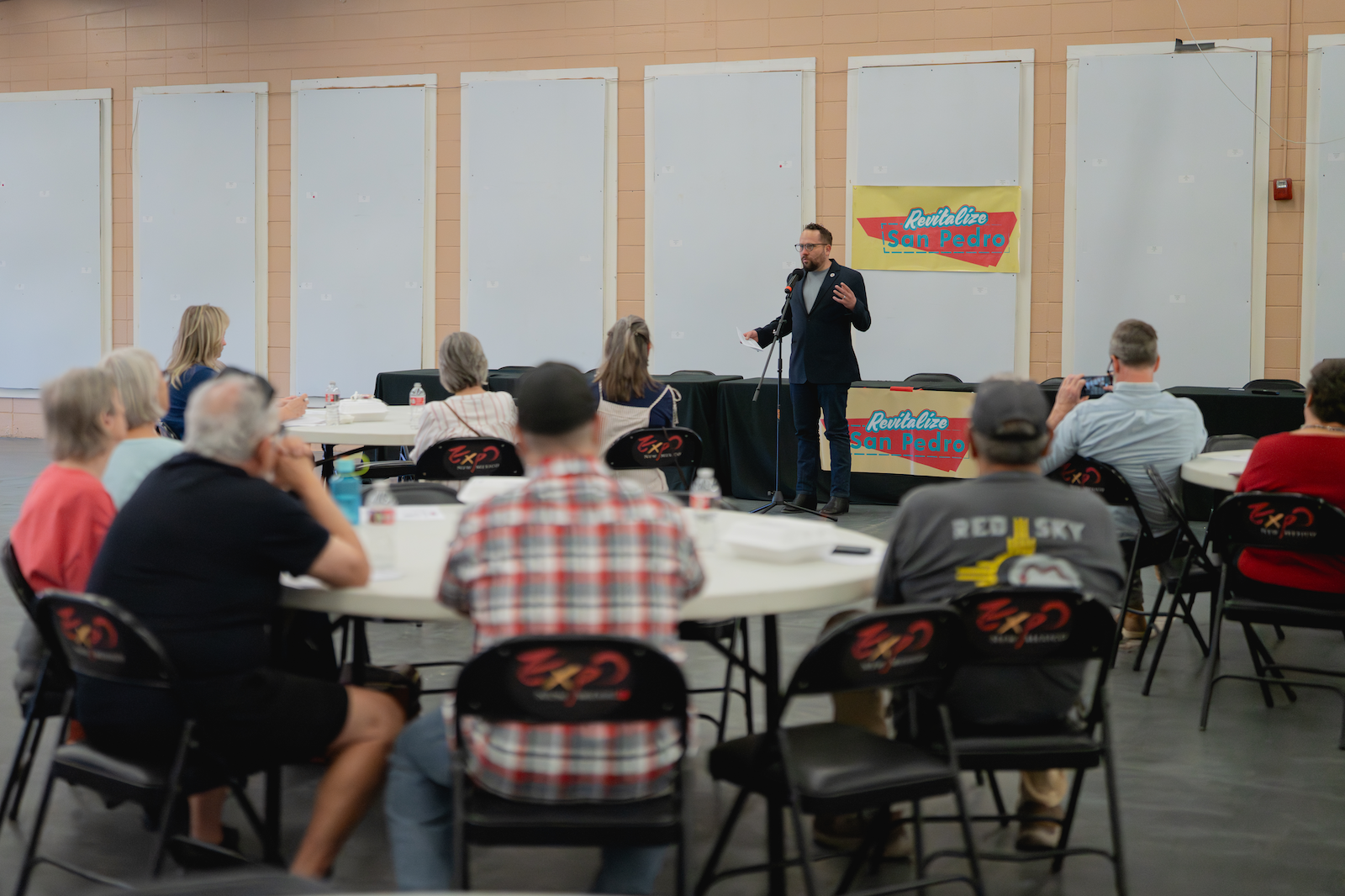
Executive Director Adrian N. Carver welcomes participants to the Public Safety Town Hall.
The room included the APD Acting SE Area Commander, ACS Deputy Director Walter Adams, NM Coalition to End Homelessness Executive Director Monet Silva, CABQ Planning Deputy Director for Code Enforcement Jeremy Keiser, and CABQ Health, Housing & Homelessness Homelessness Innovation Officer Brittany Karnezis. Attendees called the panel informative — and the conversation that followed made clear why this conversation needed to happen.
WHAT THE CORRIDOR SAID
After the panel, participants broke into small groups organized around six topics: encampments and homelessness, litter, walkability, housing, drug use, and theft and vandalism. The feedback was detailed, honest, and consistent across groups.
Encampments and Homelessness
Participants didn't frame this as an enforcement problem alone. The most common ask was for a safe, staffed camp space — a managed environment with wraparound services rather than a cycle of displacement. People called for more proactive intervention: housing-first approaches, eviction prevention, and rental assistance that helps people stay housed before they lose it. The overall sentiment was clear — the corridor wants effective support structures, not just removal.
Housing
Housing came up in nearly every breakout, and participants connected it directly to homelessness, drug use, litter, and safety. The asks were concrete: build more housing, preserve what exists, and make it permanently affordable. Participants called for mixed-income development, higher income thresholds to qualify for assistance, and expanded housing vouchers. Several people pointed to vacant and underutilized lots along and near the corridor as opportunities. Policy ideas included tax credits, low-interest loans, increased citywide density, and a fresh look at the Integrated Development Ordinance. The through-line: stable housing is the root intervention for most of what the corridor is dealing with.
Walkability
Participants tied walkability directly to safety and comfort — and they were specific about what's missing. Wider, more accessible sidewalks. More trees and shade. Better lighting. Security cameras. More trash bins. An expanded Albuquerque Ambassador presence. Bike racks and protected bike lanes. These aren't amenity requests — they reflect what it actually feels like to be a customer, employee, or resident trying to move through this corridor on foot.
Litter
The conversation on litter focused on accountability and systems. Participants called for stronger code enforcement, better property and business maintenance standards, and more coordinated city-funded cleanup programs. Several people suggested hiring individuals experiencing homelessness or in transitional situations for cleanup work — connecting a social need with a practical corridor need. There was also pointed feedback about needle exchange practices, with calls for stricter one-for-one exchanges to reduce the number of needles left in public spaces.
Drug Use
Participants approached drug use as a public health issue connected to mental health, homelessness, and gaps in services — not just a public safety enforcement problem. Proposed responses included on-site behavioral health services, permanently affordable housing with support built in, and school-based prevention programs. The conversation reflected a corridor that wants visible public drug use addressed, and also understands that enforcement alone won't solve it.
Theft and Vandalism
Here too, participants connected the problem to unmet needs. Proposals included increased drug enforcement and stronger accountability for service providers — but also calls to provide basic needs like warmth, restrooms, and phone charging access in public spaces. Business-to-business collaboration on security came up as a practical near-term step. The recurring theme: when basic needs go unmet in public space, businesses absorb the cost.
WHAT COMES NEXT
The town hall confirmed what RSPP has long argued: public safety on a commercial corridor isn't separate from economic development. It's the foundation of it.
RSPP is compiling the feedback and working with city partners to identify next steps. We'll be sharing those with the corridor as they take shape. If you attended and want to stay connected to the follow-up, or if you weren't there and want to weigh in, reach us at connect@sanpedroabq.org.